Achilles tendon pain is one of the most common lower-limb problems seen in active adults — and one of the most manageable, when addressed early and correctly. Despite the dramatic mythology behind its name, Achilles tendinopathy today responds well to evidence-based physiotherapy in the vast majority of cases.
At Vitality Physiotherapy, we regularly assess and treat Achilles tendinopathy across our Esher and Southwark clinics, working with runners, gym-goers, and recreational athletes to get them back to the activities they love.
What Is the Achilles Tendon?
 The Achilles tendon is the largest and strongest tendon in the body. It connects the calf muscle complex — the gastrocnemius (medial and lateral heads) and soleus — to the heel bone (calcaneus), forming a thick, powerful structure that stores and releases energy with every step. It is central to walking, running, jumping, and pushing off the foot.
What Is Achilles Tendinopathy?
Achilles tendinopathy describes a spectrum of pain, stiffness, and structural change within the tendon caused by overload rather than a single traumatic event. It is fundamentally a condition of load and adaptation: the tendon is being stressed faster than it can recover and remodel.
There are two distinct clinical presentations:
- Mid-portion tendinopathy — pain localised 2–6 cm above the heel, the more common pattern in runners
- Insertional tendinopathy — pain at the point where the tendon meets the heel bone, often more stubborn and requiring a modified rehabilitation approach
Typical Symptoms
Achilles tendinopathy tends to develop gradually. The most common presentation includes:
- Pain during or after exercise, often with a characteristic “warm-up” pattern — easing as you get moving, returning afterwards
- Stiffness in the first few steps out of bed in the morning
- Localised tenderness or thickening along the tendon
- Reduced power or confidence when pushing off or rising onto your toes
- Swelling or a palpable nodule in the tendon in more established cases
Symptoms often fluctuate, particularly in the early stages, which can make it tempting to push through — though this typically delays recovery.
Common Causes and Risk Factors
Achilles tendinopathy is rarely caused by a single factor. It usually develops when a combination of load, tissue capacity, and biomechanical variables converge.
Training-related factors
- A sudden spike in running volume, pace, or intensity
- Introduction of hills, sprints, or plyometrics without adequate preparation
- A change in training surface
- Insufficient recovery between sessions
Physical and biomechanical factors
- Reduced ankle mobility
- Calf weakness or reduced endurance
- Altered foot posture, including overpronation
- Reduced load-bearing capacity in the lower limb more broadly
Lifestyle and equipment factors
- A change in footwear, particularly reduced heel height
- A return to activity after a sedentary period
- Age-related tendon changes — this condition is most prevalent in the 30–50 age group, though it affects all ages
How Is It Diagnosed?
In most cases, Achilles tendinopathy is diagnosed clinically, without the need for imaging. A thorough physiotherapy assessment will typically include:
- A detailed history of your symptoms and training load
- Palpation of the tendon to identify the location and nature of the pain
- Strength and range of movement testing
- Functional assessment, including walking, single-leg calf raises, and where relevant, hopping or running analysis
Ultrasound imaging is occasionally used where symptoms are atypical, progress is unexpectedly slow, or a more serious pathology needs to be excluded — but it is not routinely required to begin rehabilitation.
Treatment and Rehabilitation
The evidence for conservative management of Achilles tendinopathy is excellent, and the majority of people make a full recovery with physiotherapy.
Treatment at Vitality Physiotherapy focuses on identifying the underlying load issue and systematically rebuilding the tendon’s capacity. Rehabilitation is progressive and structured — and critically, it does not involve complete rest.
 Load management The first step is to reduce aggravating activities to a level the tendon can tolerate, while maintaining as much training as possible. Complete rest is rarely helpful and may slow recovery.
Progressive strengthening Tendon rehabilitation is driven by loading, not by passive treatment. A structured programme will typically begin with isometric calf exercises to manage pain, progressing to heavy slow resistance training, in our private well- equipped gym and ultimately to sport-specific loading and plyometrics. This progression is evidence-based and forms the cornerstone of recovery.
Mobility and biomechanics Where reduced ankle range of motion, calf tightness, or altered gait mechanics are contributing factors, these will be addressed as part of your programme. For runners, gait analysis may be appropriate.
Return to activity Recovery is guided by your symptom response and functional testing rather than arbitrary time frames. A structured, phased return to your sport or exercise is planned from the outset.
How Long Does Recovery Take?
Recovery timelines vary depending on how long symptoms have been present and their severity:
- Mild, recent-onset cases: 6–8 weeks
- Moderate presentations: 3–6 months
- Long-standing or complex cases: 6–12 months
It is worth noting that progress is driven far more by the quality and consistency of loading than by time alone. This is why structured physiotherapy input tends to produce better outcomes than self-managed rest.
When Should You See a Physiotherapist?
We would recommend seeking an assessment if:
- Pain has persisted for more than one to two weeks
- Symptoms are worsening despite reducing your activity
- You are struggling to run, train, or walk comfortably
- Morning stiffness is not settling
- You can see or feel swelling or thickening in the tendon
- You are unsure how to continue exercising safely
Early intervention consistently leads to faster recovery and significantly reduces the risk of symptoms becoming chronic.
Red Flags — Seek Urgent Medical Attention
While most Achilles pain is the result of overload and responds well to physiotherapy, the following symptoms may indicate an Achilles tendon rupture or other serious injury requiring urgent assessment:
- A sudden “pop” or tearing sensation in the back of the ankle or lower calf
- Immediate, severe pain during activity
- Difficulty or inability to push off the foot, or to rise onto your tiptoes
- A visible gap or indentation in the tendon
- Rapid swelling or significant bruising following an acute incident
- Marked weakness in the calf, particularly on plantarflexion
- Unexplained calf pain with swelling (to exclude serious vascular or other pathology)
If an Achilles rupture is suspected, do not stretch or load the leg. Seek same-day medical evaluation.
Achilles Tendinopathy Treatment in Esher and Southwark
Whether you are based in Southwark, Waterloo, London Bridge or in Esher or the surrounding areas — including Claygate, Thames Ditton, Cobham, or Weybridge — our physiotherapy team can assess your tendon, identify the contributing factors, and build a rehabilitation programme tailored to your sport, lifestyle, and goals.
We offer accurate clinical diagnosis, evidence-based loading programmes, structured return-to-running plans, and long-term strategies to reduce recurrence.
To book an assessment with George at our Esher clinic, https://www.vitality-physio.co.uk/book-an-appointment-online or call 02071939928

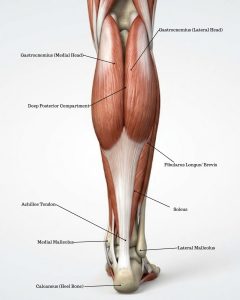 The Achilles tendon is the largest and strongest tendon in the body. It connects the calf muscle complex — the gastrocnemius (medial and lateral heads) and soleus — to the heel bone (calcaneus), forming a thick, powerful structure that stores and releases energy with every step. It is central to walking, running, jumping, and pushing off the foot.
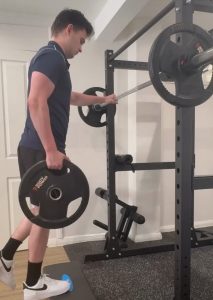 Load management The first step is to reduce aggravating activities to a level the tendon can tolerate, while maintaining as much training as possible. Complete rest is rarely helpful and may slow recovery.