
Knee Pain in the Growing Athlete

A Practical Guide for Parents in Esher and Surrey

Written by George Eaton MSK Physiotherapist

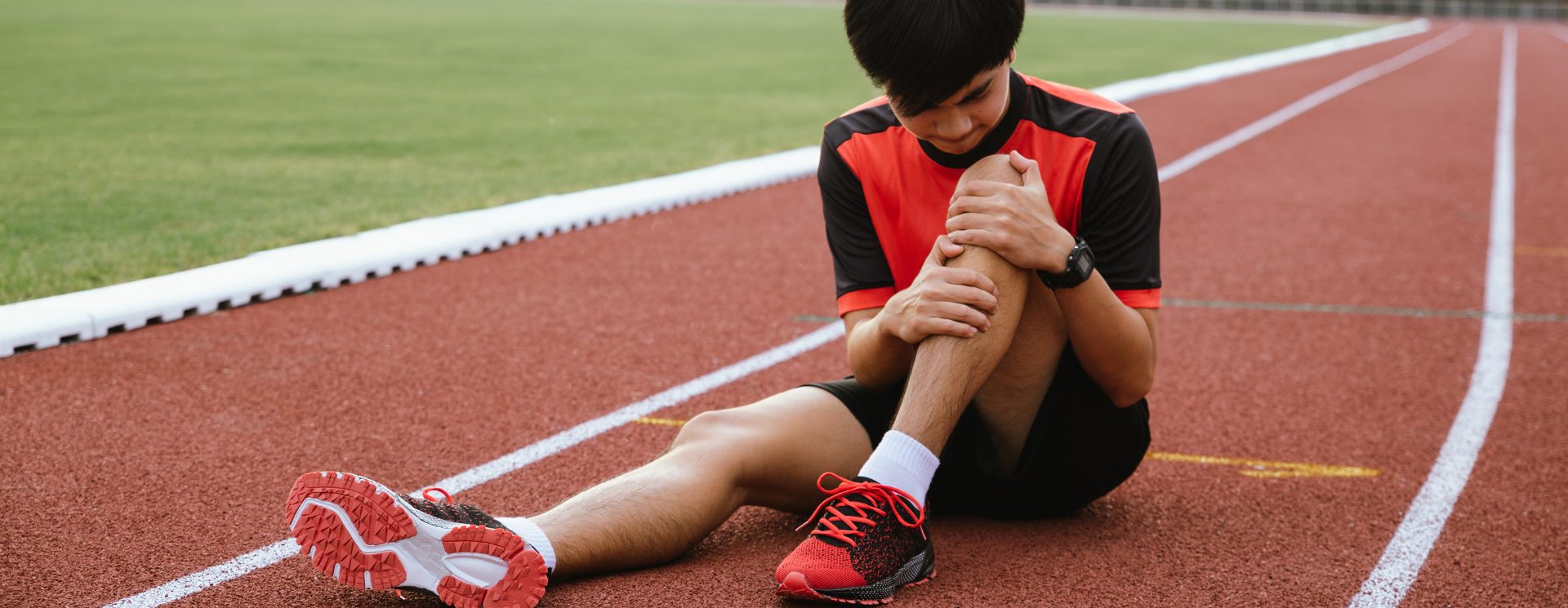
Knee pain at the front of the knee is one of the most common reasons active young people come to see us. Whether they play football, rugby, netball, or athletics, many adolescents in Esher experience this at some point — and it can feel alarming when your child starts limping off the pitch.


The reassuring truth is that in the vast majority of cases, this type of knee pain is not serious. It has a predictable cause, a clear diagnosis, and responds well to the right management. With the right approach, most young athletes do not need to stop sport completely — they just need guidance on how to stay active sensibly.


This guide explains why it happens, what the three most common conditions look like, and what to expect from physiotherapy treatment.


Why Do Knees Struggle During Growth Spurts?

During adolescence, bones can grow rapidly over a short period — sometimes gaining several centimetres in a matter of months. The muscles and tendons that attach to those bones take longer to adapt, which creates increased tension at the points where tendons meet bone.

Diagram explaining adolescent apophyseal injury — showing how rapid bone growth outpaces tendon adaptation, creating vulnerability at growth plate attachment points in young athletes


These attachment points (called apophyses) are temporarily softer and more vulnerable during growth, making them sensitive to the repeated stress of running, jumping, and change of direction. Think of it like a nail pulling at soft wood — the same force that would hold firm in a mature structure creates movement and irritation in a growing one.


Add to this the fact that many young athletes are increasing training volume or competing more frequently, and you have the classic recipe: a mismatch between what the tissue can handle and what is being asked of it.


The Three Most Common Conditions

Understanding the differences between these three conditions matters, because the exact location of pain is the single most useful clue to what is happening.


Osgood-Schlatter Disease

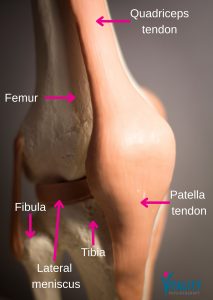
This is the most well-known of the three and typically affects adolescents aged 10–15 during a growth spurt. Pain is felt at the tibial tuberosity — the bony bump just below the kneecap — and is often accompanied by visible or palpable swelling at that site.


Symptoms are aggravated by running, jumping, kneeling, and going up or down stairs. They often fluctuate with activity, improving during rest and flaring with heavier training. In some cases, a small bony prominence remains after symptoms resolve — but this is usually painless and does not affect long-term function.


Sinding-Larsen-Johansson Syndrome

This condition occurs slightly higher up, at the inferior pole of the patella (the bottom of the kneecap), where the patellar tendon originates. It tends to affect slightly younger adolescents and can sometimes be mistaken for tendon pain because of its location.


Pain is aggravated by explosive activities — sprinting, kicking, and jumping — but unlike Osgood-Schlatter, there is usually no visible bony swelling. The diagnosis is primarily clinical, based on where the pain is located.


Patellar Tendinopathy

Patellar tendinopathy is a tendon overload condition rather than a growth-related problem, and is particularly common in older teenagers involved in jumping and court sports. Pain is felt within the tendon itself, typically at or just below the kneecap.


The pattern of symptoms is subtly different: stiffness and pain may be worse at the start of activity, ease as the tendon warms up, and then return afterwards. It is closely linked to spikes in training load — a sudden increase in sessions, a change in playing surface, or a run of tournaments in a short period.


Unlike the apophyseal conditions, patellar tendinopathy can persist if load is not managed carefully — but it responds very well to structured strengthening programmes.


How Do We Tell the Difference?

The table below summarises the key clinical differences. Exact pain location is the most reliable differentiator:


ConditionPain LocationKey Features
Osgood-SchlatterBony bump below kneecapVisible lump; worse with running, jumping, kneeling
Sinding-Larsen-JohanssonBottom of the kneecapNo lump; worse with sprinting and kicking
Patellar TendinopathyWithin the tendonStiff at start; eases mid-activity; load-related


Additional clinical clues include a visible bony bump (more likely Osgood-Schlatter), a recent growth spurt (supports either apophyseal condition), and a load-related pattern of stiffness that eases with warm-up (more suggestive of patellar tendinopathy).


Does My Child Need to Stop Sport?

In most cases, complete rest is neither necessary nor helpful. Research — and clinical experience — consistently shows that staying active, with the right modifications, tends to produce better outcomes than stopping altogether. Movement supports tissue adaptation; inactivity does not.


Instead of stopping, the goal is to manage load intelligently. This might mean reducing training intensity, limiting high-impact drills, or temporarily stepping back from competition while maintaining structured exercise.


A practical guide: the pain-monitoring model

  • Mild discomfort during activity — up to around 3–4 out of 10 — is acceptable
  • Pain should settle within an hour of finishing exercise
  • Symptoms should not be worse the following morning


If your child consistently breaches these thresholds, it is a signal to reduce load. If they stay within them, they are likely managing well.


What Does Physiotherapy Involve?

Osgood-Schlatter treatment EsherAt Vitality Physiotherapy, our approach focuses on restoring the balance between load and tissue capacity — not simply resting the painful area and hoping for the best.

 

Assessment begins with a thorough clinical examination to confirm the diagnosis and understand any contributing factors: training load, growth history, movement patterns, and overall lower limb strength.


Treatment typically includes:

  • Targeted strengthening for the quadriceps, glutes, and calf muscles
  • Flexibility work for the quadriceps, hamstrings, and calves
  • Movement pattern assessment — running mechanics, landing control, squat technique
  • Graduated return-to-sport planning with clear milestones
  • Education for both athlete and parent around load management and growth


We also work closely with coaches where helpful, particularly around adjusting training load during flare-ups or growth spurts. Supporting the whole athlete — not just the knee — is what makes the difference.


How Long Does Recovery Take?

Both Osgood-Schlatter disease and Sinding-Larsen-Johansson syndrome are self-limiting — meaning they resolve naturally once the growth plates mature. Symptoms may last from a few months to one to two years, depending on how quickly your child is growing and how well load is managed during that period.


Patellar tendinopathy has a slightly different timeline. It can take longer to settle if load is not addressed early, but with a structured rehabilitation programme, significant improvement is typically seen within eight to twelve weeks.


In both cases, the young people who do best are those who stay engaged with their rehabilitation, remain active in a modified way, and have family and coaching support around their training.


When Should You Seek Help?

We recommend a physiotherapy assessment if:

  • Pain is limiting sport, PE, or daily activities
  • Symptoms have been present for more than two to three weeks
  • There are repeated flare-ups with return to sport
  • There is uncertainty about the diagnosis or whether it is safe to continue


Seek urgent assessment if:

  • Pain is sudden and severe
  • There is significant swelling around the knee
  • Your child cannot straighten the knee or bear weight


Ready to get your young athlete back on track?

We see adolescent patients at our Esher clinic in Surrey KT10 and our London SE1 clinic in Southwark. Our team has extensive experience in assessing and managing anterior knee pain in young athletes, and we aim to have young people seen quickly so they can get back to doing what they love.

Book an appointment at vitality-physio.co.uk or call us to speak to a member of our clinical team.


Vitality Physiotherapy  |  Women’s Health & Musculoskeletal Physiotherapy

Esher, Surrey KT10  |  London SE1  |  vitality-physio.co.uk

Running Injuries: A Physiotherapist’s Complete Guide to Treatment, Recovery and Prevention

Expert guidance from Janine Enoch Founder of  Vitality Physiotherapy — passionately working with runners across Surrey, Esher KT10, Cobham, Claygate, Weybridge, Woking and London SE1


Running is one of the most accessible, effective and rewarding forms of exercise — and around Esher and the wider Surrey area, it’s everywhere. From the wooded trails around Claygate and Oxshott to the towpath along the Thames near Weybridge, from Saturday morning parkruns to the Esher 10K, our community runs. And when injury strikes, it can feel devastating.

At Vitality Physiotherapy, with clinics in Esher (KT10) and Southwark (SE1), we work with runners at every level — from those lacing up for the first time to experienced athletes managing complex, recurring problems. This guide draws on over 25 years of clinical experience to help you understand the most common running injuries, why they happen, and what you can do about them.

Whether you’re dealing with knee pain that won’t shift, Achilles trouble that flares every time you build mileage, or you’re simply trying to stay injury-free as you train for your next event — this is written for you.


Who this guide is for: Recreational runners, parkrunners, half and full marathon trainers, returning runners after injury or a break, and anyone who wants to understand their body better.


Why Running Injuries Are So Common

Running is a high-load, repetitive activity. With every stride, your body absorbs force equivalent to two to three times your body weight — multiplied thousands of times over the course of a run. Most of the time, your body adapts beautifully to this. But when load exceeds your body’s capacity to absorb it, tissue becomes stressed and injury follows.

Research consistently shows that around 50–80% of runners experience at least one injury per year. The good news is that the vast majority of running injuries are not serious, are not caused by running itself, and respond well to physiotherapy — often without needing to stop running entirely.

The most common causes of running injury

  • Too much, too soon — increasing mileage or intensity faster than the body can adapt
  • Muscle weakness — particularly in the hips, glutes and core, which stabilise every stride
  • Previous injury — undertreated or incompletely rehabilitated injuries are a major risk factor
  • Training error — ignoring recovery, skipping rest days, or ramping up before a race
  • Footwear — worn-out shoes, or shoes that don’t suit your gait pattern
  • Biomechanical factors — how you run influences where load accumulates


A note from our clinic: In our experience at Vitality Physiotherapy, most running injuries we see in Surrey and London are not caused by bad luck — they are caused by identifiable, addressable factors. Understanding yours is the starting point for getting better.


The Most Common Running Injuries — and What to Do About Them

Below are the injuries we most frequently assess and treat at our Esher and Southwark clinics. Click the links to read our full articles on each condition.

  1. Runner’s Knee (Patellofemoral Pain Syndrome)

A dull ache at the front of the knee, often worse going downstairs or after sitting for long periods. Runner’s knee is one of the most common presentations we see, particularly in recreational runners who have recently increased their mileage.

It is frequently associated with hip weakness — when the glutes and hip abductors are not working effectively, the knee is forced to compensate, increasing load on the patellofemoral joint. Treatment focuses on load management, hip and quadriceps strengthening, and gradual return to full training.

Key message: Runner’s knee is not a reason to stop running permanently. With the right rehabilitation, most people return to full training.

  1. IT Band Syndrome

Sharp or burning pain on the outside of the knee, typically coming on at a predictable point in the run — often around the 2–3 mile mark. IT band syndrome is notoriously frustrating because it tends to recur when runners return too quickly or rely solely on foam rolling and stretching.

The IT band itself is not the problem — it is a symptom of a loading issue elsewhere, most commonly weakness in the hip abductors and poor pelvic control. Addressing these root causes, combined with a structured return-to-run programme, produces lasting results.

  1. Achilles Tendinopathy

Stiffness and pain at the back of the ankle, typically worst first thing in the morning or at the start of a run. Achilles tendinopathy is an overuse condition that requires careful load management — complete rest often makes things worse, not better.

Tendon rehabilitation is a speciality area at Vitality Physiotherapy. Evidence-based eccentric and progressive loading programmes, delivered consistently over time, are the most effective treatment. Most cases resolve fully with appropriate physiotherapy.

Important: If you have sharp pain or sudden onset swelling at the Achilles, seek assessment promptly — a tendon rupture requires different management entirely.

  1. Shin Splints (Medial Tibial Stress Syndrome)

Pain along the inner edge of the shin, usually diffuse and aching during and after runs. Shin splints are extremely common in newer runners and those returning after a break, and typically respond well to relative rest, load management and strength work.

Ignored or pushed through repeatedly, medial tibial stress syndrome can progress to a stress fracture — which requires a significantly longer recovery. Early assessment is important.

  1. Plantar Fasciitis

Stabbing pain in the heel, classically worst with the first steps in the morning. Plantar fasciitis is a loading issue affecting the connective tissue of the sole of the foot, and is influenced by calf tightness, foot biomechanics, and training load.

Treatment is effective but requires patience — this is an injury that responds to progressive loading rather than rest alone. Physiotherapy including calf and foot strengthening, load management advice, and where appropriate orthotic assessment produces excellent long-term outcomes.

  1. Hip and Glute Pain

Pain in the hip, buttock or outer thigh is increasingly common in recreational runners, particularly as we age or increase training demands. Presentations we see regularly include greater trochanteric pain syndrome (outer hip pain), hip flexor tendinopathy, and piriformis-related gluteal pain.

Many of these respond well to targeted strengthening and load management. If you have hip pain that radiates down the leg, a physiotherapy assessment is particularly important to identify the source accurately.


Should I Run Through an Injury?

This is the question we’re asked most often — and the honest answer is: it depends.

Some injuries can be managed while continuing to run at a reduced level. Others require a period of relative rest to allow the tissue to recover before loading resumes. The key factors are the type of injury, the severity of symptoms, and whether running is causing lasting damage or simply discomfort.

As a general guide:

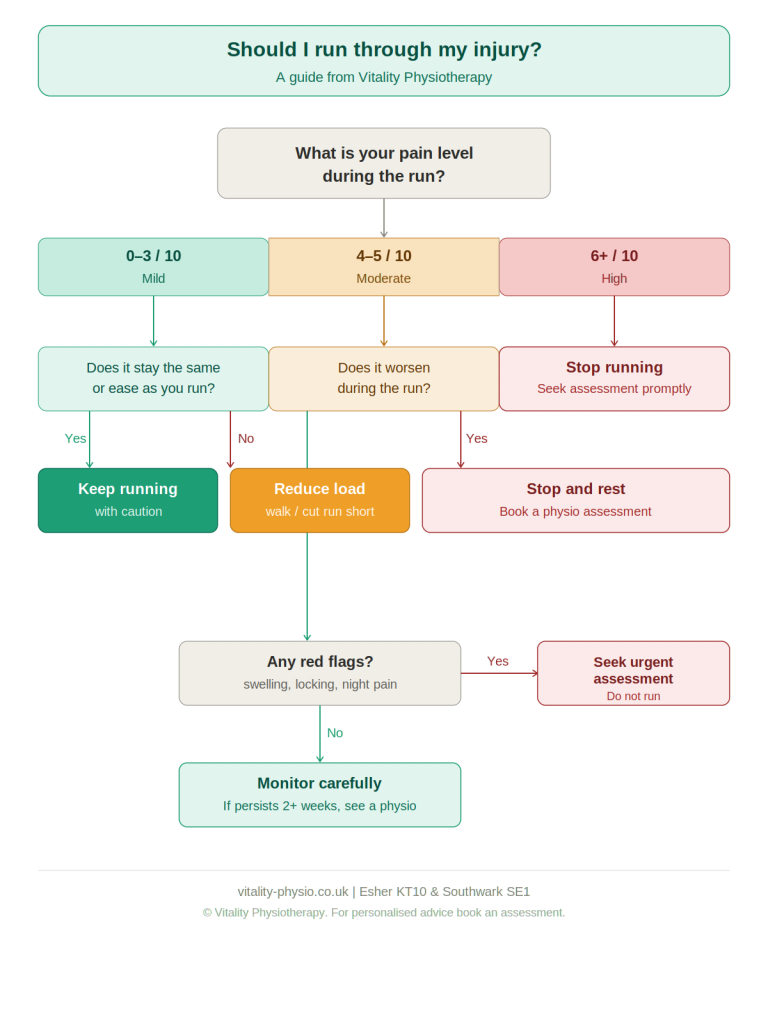
  • Pain above a 3 or 4 out of 10 during a run is a signal to reduce load or stop
  • Pain that worsens significantly during a run, or that you are unable to run through, needs assessment
  • Pain that is present at rest, especially at night, should always be assessed
  • Swelling, giving way, locking, or sudden-onset sharp pain are red flags — seek assessment promptly

At Vitality Physiotherapy, we aim to keep you running wherever it is safe to do so. We work with you to find a manageable training level, modify your programme, and build back gradually — rather than telling you to stop until everything is perfect.

Running decision tree


Running Injury Prevention: What the Evidence Says

The single most effective thing you can do to reduce your injury risk as a runner is strength training. A growing body of research demonstrates that runners who include regular strength work — particularly targeting the hips, glutes and single-leg stability — sustain fewer injuries and recover faster when they do.

Beyond strength work, the evidence supports:

  • Gradual load progression — the commonly cited ‘10% rule’ is a useful starting point
  • Adequate recovery — rest days are not optional; they are when adaptation happens
  • Sleep — consistently underrated as an injury risk factor
  • Appropriate footwear — not necessarily the most expensive, but suited to your foot type and gait
  • Addressing previous injuries properly — incomplete rehabilitation is one of the strongest predictors of future injury


From our clinic: We often see runners who have been managing a ‘niggle’ for months before seeking help. Early physiotherapy assessment — before a minor issue becomes a significant injury — is almost always the better approach.


When to See a Physiotherapist

You do not need to wait until you cannot run to seek physiotherapy. The following are all good reasons to book an assessment:

  • A pain or ache that has persisted for more than 2 weeks
  • An injury that keeps coming back in the same location
  • Pain that is changing how you run — altering your gait or causing you to compensate
  • You are training for an event and want to manage a problem before it escalates
  • You want a running assessment to identify any biomechanical factors that may be increasing your injury risk


At Vitality Physiotherapy, our running assessments are carried out by experienced chartered physiotherapists who understand both the clinical and training demands of running. We do not offer one-size-fits-all advice — every runner is different, and every treatment plan is individual.


Running Physiotherapy in Surrey and London — Our Clinics

Vitality Physiotherapy has two clinic locations:

From the treatment room to the finish line — congratulations to Jessica on completing the London Marathon

Esher, Surrey (KT10)

Our Surrey clinic is conveniently located for runners across Esher, Claygate, Cobham, Oxshott, Hersham, Hinchley Wood, Thames Ditton and Weybridge. We are a short walk from Esher station on the South Western Main Line.

We regularly see runners preparing for local events including the Esher 10K, the Claygate 5K, and a range of half and full marathons across Surrey and London.

Southwark, London (SE1)

Our London clinic is located in Southwark SE1, close to London Bridge station. We see runners from across South and Central London, including those training for the London Marathon, the Big Half, and the many parkruns across the capital.


Both clinics offer the full range of physiotherapy services including running assessments, injury rehabilitation, and women’s health physiotherapy — our specialist area of practice for over 25 years.


Book a Running Assessment

If you are dealing with a running injury, managing a recurring problem, or simply want an expert assessment of your running health, we would love to help.

Book online at vitality-physio.co.uk or call us to speak with a member of the team.

Esher KT10  |  Southwark SE1  |  vitality-physio.co.uk


Pelvic floor issues when you run? Read this

ACL injuries in football

ACL Injuries in Football: What You Need to Know — and How to Get Back on the Pitch

An ACL injury is one of the most feared diagnoses in football. The crack, the instant instability, the sinking feeling — and then the long road ahead. But here’s what we know: with the right rehab, most players return to the game they love. This article covers everything you need to understand about ACL injuries — what causes them, what recovery looks like, and what it takes to get back on the pitch safely.

What Is the ACL — and Why Does It Matter?

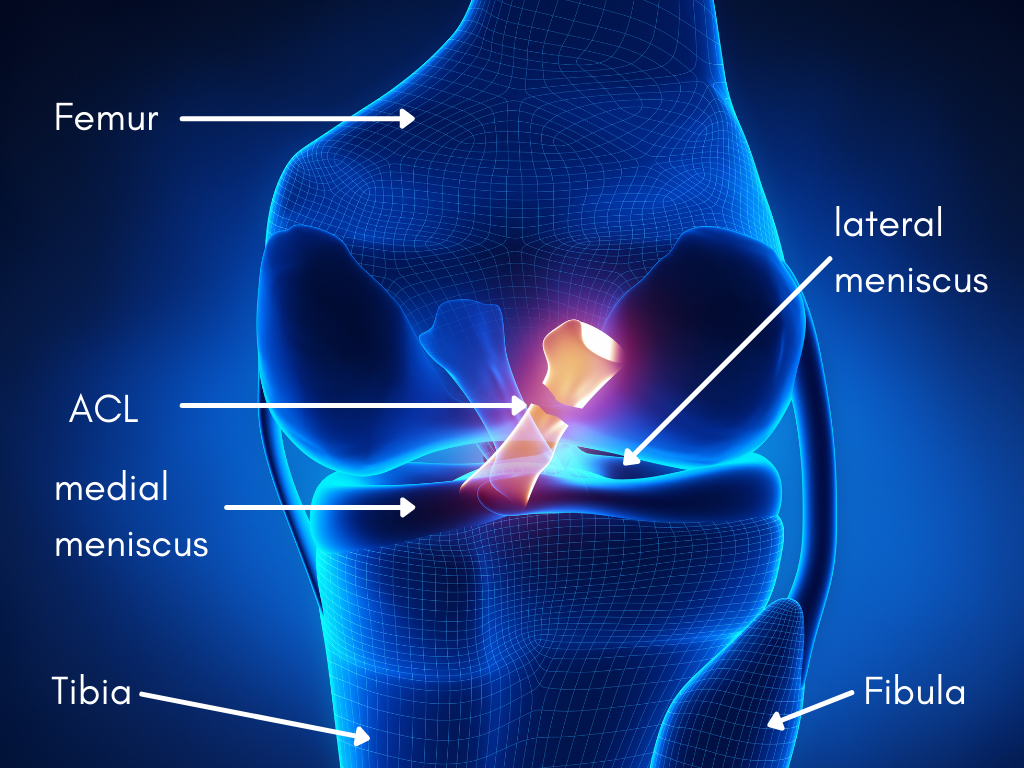
The anterior cruciate ligament (ACL) is a band of connective tissue that connects your tibia (shin bone) to your femur (thigh bone) inside the knee. It does two critical jobs.

Mechanical stability: it stops your tibia from sliding forward on your femur and controls rotational forces through the knee.

Sensory signalling: the ACL is densely packed with nerve receptors that act as a data centre for your brain, relaying real-time information about your knee’s position, tension, and movement as you run, jump, twist, and change direction.

When the ACL is damaged, you lose both. The knee feels unstable. Your brain loses the fine-grained feedback it relies on to coordinate movement. That’s why ACL rehab isn’t just about rebuilding strength — it’s about retraining the whole neuromuscular system.

How Do ACL Injuries Happen in Football?

Not how you might think. A landmark 2020 study published in the British Journal of Sports Medicine examined 134 ACL injuries in elite football players and found:

  • 44% were non-contact injuries
  • 44% were indirect contact injuries
  • Only 12% involved direct contact to the knee

That’s 88% of injuries with no direct blow to the knee. So what’s actually causing them?

The mechanics of injury

The most common triggers were:

  • Pressing (47%): the high-intensity movement to win the ball from an opponent
  • Being tackled (20%): defensive body contact while in possession
  • Kicking and balance (16%): maintaining stability during or after a strike
  • Landing from a jump (7%): particularly on one leg with rotational forces

A key finding was mechanical perturbation — when a player’s upper body is bumped or pulled while their lower body is planted on the ground, the resulting twisting force through the knee dramatically increases ACL injury risk. Pressing, tackling, and defensive actions are all high-risk moments, not because players are colliding knee-to-knee, but because of the aggressive whole-body movement interactions involved.

The high-risk position: dynamic knee valgus

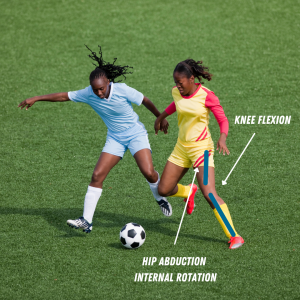
The most common mechanism of injury is dynamic knee valgus — where the knee collapses inward as the hip rotates internally and the foot is planted. This position places enormous stress on the ACL. It’s most likely to occur during deceleration, landing, or a rapid change of direction. It can also happen subtly during pressing and tackling when the player is off-balance.

Identifying and correcting this movement pattern is a cornerstone of both ACL rehab and injury prevention.

Timing: when in the match do injuries happen?

The same 2020 BJSM study found that 25% of all ACL injuries occurred in the first 15 minutes of the match — before fatigue can be blamed. This matters because it shifts the conversation away from ‘the player was tired’ and towards readiness: how prepared is the neuromuscular system at kick-off?

Proper warm-up, cognitive readiness, and pre-match activation are not optional extras. They are injury prevention.

A Note on Female Athletes

Example of dynamic valgus load on knee.

Female footballers face a significantly higher risk of ACL injury than their male counterparts — estimates range from two to eight times higher, depending on the sport and study. Contributing factors include differences in hormonal fluctuation across the menstrual cycle, biomechanical differences in landing patterns, and neuromuscular control. At Vitality Physiotherapy, our team has specific expertise in female athlete ACL rehab and prevention — something we factor into every programme we design.

Is an ACL Tear Career-Ending?

“Be patient, don’t cut corners, and do everything the Physio tells you.” — Alan Shearer CBE

No. And there’s compelling evidence to back that up.

A widely cited study reported that 83% of athletes return to professional sport following ACL reconstruction. The key variable isn’t the injury itself — it’s the quality of the rehabilitation.

Consider Alan Shearer. On Boxing Day 1992, playing for Blackburn Rovers against Leeds United, he ruptured his ACL in the first half — and didn’t realise it. He went on to score twice in a 3-1 win. After surgery and a structured rehab programme, he returned the following season to score 31 goals in 40 games. He credits that return to one principle: do the work, follow your physio, don’t rush it.

The players who struggle to return are, more often than not, those who return too soon — before their knee is truly ready.

How Long Does ACL Rehab Take?

The standard timeframe is 9 months — but this is a minimum, not a target. Virgil van Dijk returned at 9 months after his 2020 injury. Others take 12–18 months to reach full competitive fitness. The timeline depends on:

  • Whether you had surgery or are managing conservatively
  • The extent of any associated injuries (meniscus, other ligaments)
  • Your pre-injury fitness level
  • How consistently and intelligently you complete your rehab
  • Your neuromuscular readiness — not just structural healing

The research is clear: returning at 9 months carries a significantly lower re-injury risk than returning at 6 months. Every week of quality rehab reduces that risk. There is no shortcut that doesn’t cost you later.

What Does ‘Ready to Return’ Actually Mean?

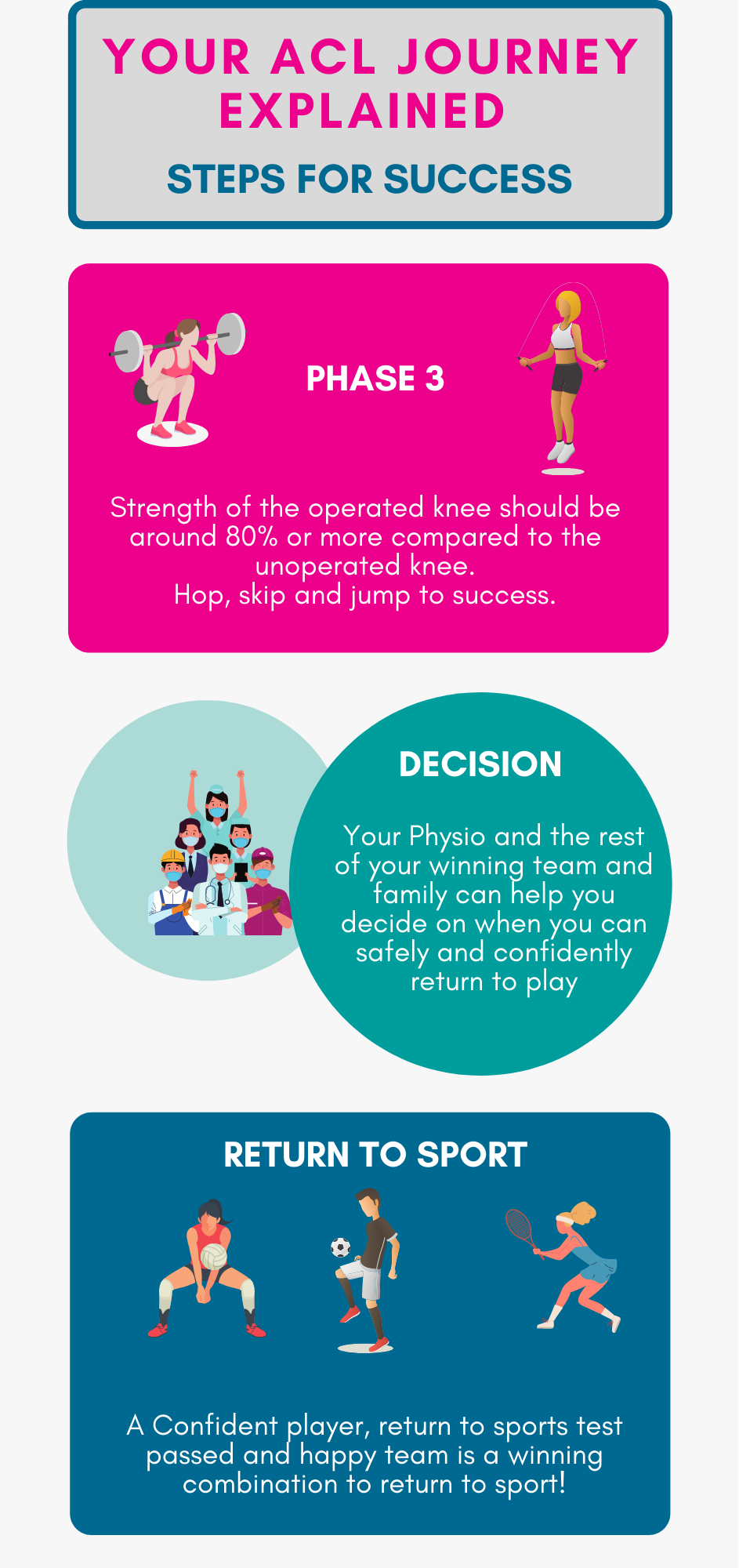
Football ACL injury infographic by Vitality Physiotherapy

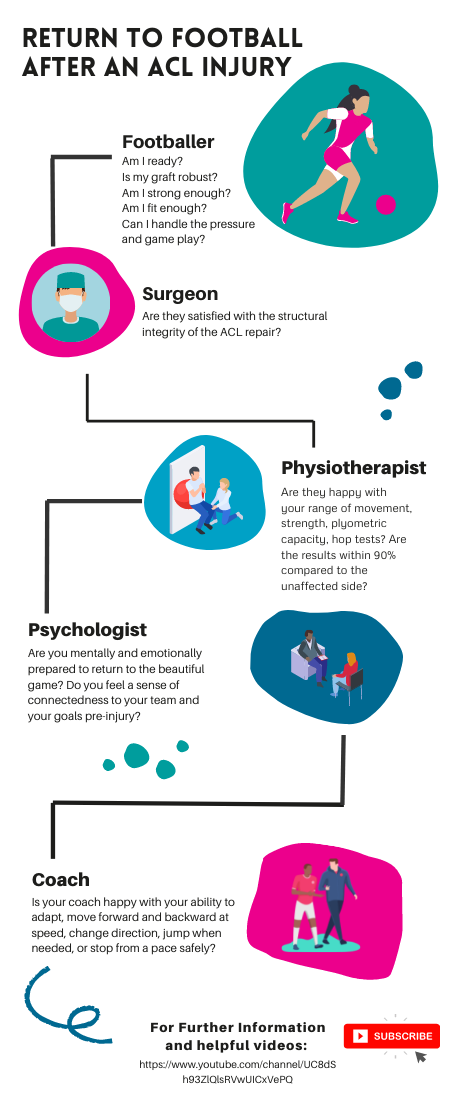
Return to football infographic by Vitality Physiotherapy

Return-to-play is not a date on a calendar. It’s a decision made by a team — athlete, physiotherapist, surgeon, coach, and sometimes a sports psychologist — using objective data. Here’s what that looks like in practice.

The athlete

Do you trust your knee? Can you commit to a tackle, a sprint, a jump — without hesitation or fear? Psychological readiness is not a nice-to-have. Fear of re-injury is one of the strongest predictors of not returning to pre-injury performance levels. Your inner voice matters as much as your single-leg hop score.

The physiotherapist

Your physio needs to see objective evidence of readiness across multiple domains:

  • Strength and power: can you achieve 90%+ limb symmetry on strength testing?
  • Hop testing battery: single leg vertical hop, forward hop, timed 6m hop, triple hop, triple crossover hop, lateral hop, medial hop, and their rotational variants. This isn’t an arbitrary list — each test assesses a different demand of football movement.
  • Neuromuscular control: reaction times, adaptability under fatigue, dynamic balance
  • Movement quality: can you decelerate, change direction, and land without compensating?

The surgeon

Structural integrity matters. Your surgeon will assess graft healing, range of movement, and whether the reconstructed ACL has the mechanical properties required for full sport. A happy surgeon means a structurally sound knee — but structural soundness alone is not clearance to play.

The coach

Pitch-based performance has to match the test results. Can you accelerate and decelerate at full speed? Change direction under pressure? Jump and land when required? React to a ball coming at you unpredictably? Return to training is the bridge between rehab and competition — it shouldn’t be skipped.

The role of cognitive training

A 2021 study found that cognitive skills, reaction time, and processing speed are significant factors in preventing ACL re-injury. This is why progressive, evidence-based ACL rehab includes reactive drills — small-sided games, decision-making under pressure, gates games, possession exercises. The nervous system needs to be retrained, not just the muscles.

Physical fitness without cognitive and neuromuscular readiness is a re-injury waiting to happen.

The Final Whistle

An ACL tear is not relegation. It is a significant injury — but it is one that, with the right support and the right approach, most players recover from fully.

The players who come back stronger are the ones who take the rehab seriously, trust the process, and resist the temptation to rush. There are no shortcuts — but there is a clear path.

At Vitality Physiotherapy, we have the clinical experience, the protocols, and the team to take you from injury to full return to football — whether you’re playing Sunday league or semi-professionally. We work across our Southwark (SE1) and Esher (KT10) clinics, and we’d love to support your recovery.

Want to talk through your injury? Book a free 15-minute call with one of our ACL specialists — from the convenience of home.

Call us: 020 7193 9928

Email: info@vitality-physio.co.uk

References

Della Villa F et al. (2020). Football ACL injuries reloaded. British Journal of Sports Medicine Blog.

Ardern CL et al. (2018). Return to sport following ACL reconstruction. British Journal of Sports Medicine.

Grooms D et al. (2021). Cognitive and neurological contributors to ACL re-injury. Journal of Orthopaedic & Sports Physical Therapy.


ACL injuries


We've all come across a friend or famous athlete who has had their season cut short through an ill-timed knee twist and alongside the dreaded "popping" sound. When this happens, it can be daunting.  

Understanding ACL injury and knowing what steps to take to recover will help you get back to the sport you love sooner. As mentioned in our ACL tear article, the ACL is one of the main ligaments controlling the stability of your knee, and injuries to the ACL occur more frequently in sports involving landing and pivoting actions like football, netball, or skiing.   

Diagnosis of ACL Injuries 

 The Lachman Test 

John Lachman (1919-2007) was an orthopaedic surgeon at Temple University in Philadelphia who invented the technique. It's considered the most reliable way to diagnose an ACL injury. It is used by Physios and Surgeons the world over.  

How is the Lachman test performed? 

The Lachman test is performed like this: 

  1. Lie flat on your back. Relaxed, with legs straight. 
  2. Your Physio places your knee in a slightly bent (and sometimes rotated) position. 
  3. One hand is on the back of your lower leg (just under your knee joint), and the other is on the front of your thigh. 
  4. They then pull your shin forwards firmly while stabilising your thigh.

 Why do we do the Lachman test?  

 To measure the endpoint and joint laxity.  

The endpoint is where the end of the joint movement is felt as the shin is pulled forward. If this endpoint feels further away than what's expected, then this may indicate an injured ACL.  

 Joint laxity is the general feel of your joint movement and the sense of how lax (or loose) your ACL feels compared to your other knee.  


Grading ACL tears with the Lachman test: 

  • Normal. There's no difference in movement or laxity between your left and right knees. 
  • Mild (grade 1). There's slightly more (about 2-5mm) movement than in your other knee. 
  • Moderate (grade 2). There's moderately more (about 5 to 10 mm) movement than in your other knee. 
  • Severe (grade 3). There's much more (10 to 15 mm) movement than in your other knee. 


Because we're all different and have varying baselines of "stiffness", the test should be done on your other leg too. This will give the Physio an accurate idea of what's typical for your joint.  

Anatomy of the L knee showing a ruptured ACL

The Pivot Shift test 

How is the pivot shift test performed? 

 1. Lie flat on your back. Relaxed, with legs straight.  

2. The Physio places one hand on your heel and the other just below the outer side of your knee.  

3. They apply pressure to the outside of your knee while internally rotating your lower leg and bending and straightening your knee. 

 The test is positive if your lower leg sinks backward when the knee is bent at 30-40 degrees. Sometimes a 'clunk' can be heard when this happens. 


Treatment options for ACL tears 

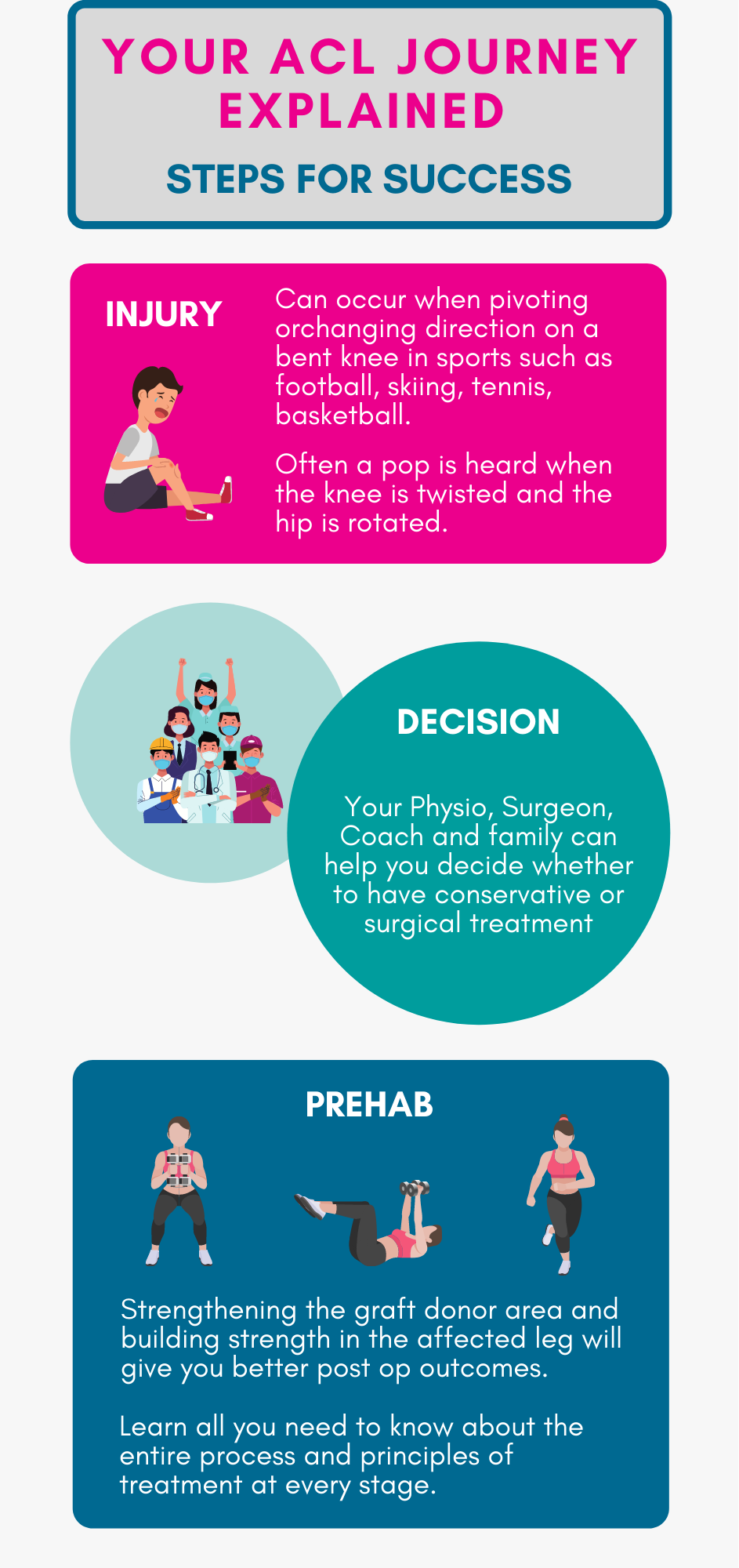
 There are two treatment options for an ACL injury: Conservative or surgical management.  

 Your age, previous injury, and fitness and rehab goals should be considered when deciding the best route to follow.  


Conservative management 

Conservative or non-surgical management involves a period of Physiotherapy treatment to restore your knee function to pre-injury level.  

Surgical management 

Having ACL surgery usually requires a minimum of 9 months of rehab tailored towards getting you back into your sport.  This may sound like a long time, but returning to sport too early can have negative implications. Mainly increasing your risk of re-injury.  


ACL Surgery  

What surgery is there for ACL tears, and what you can expect? 

 The most common type of ACL surgery is a reconstruction of a new tendon called a graft.  This is typically a minimally invasive procedure done via keyhole surgery using an arthroscope (a small camera through which your surgeon passes tiny surgical instruments).  First, the damaged ACL is removed, and then the graft is attached in its place. There are different types of grafts. They include:   

  • Autografts - Formed from tissues taken from another part of your body (like tendon tissue strands from your hamstring or patella tendon)  
  • Allograft - Formed from tissues taken from another person's body 
  • Synthetic - Formed from an artificial source or donor. 

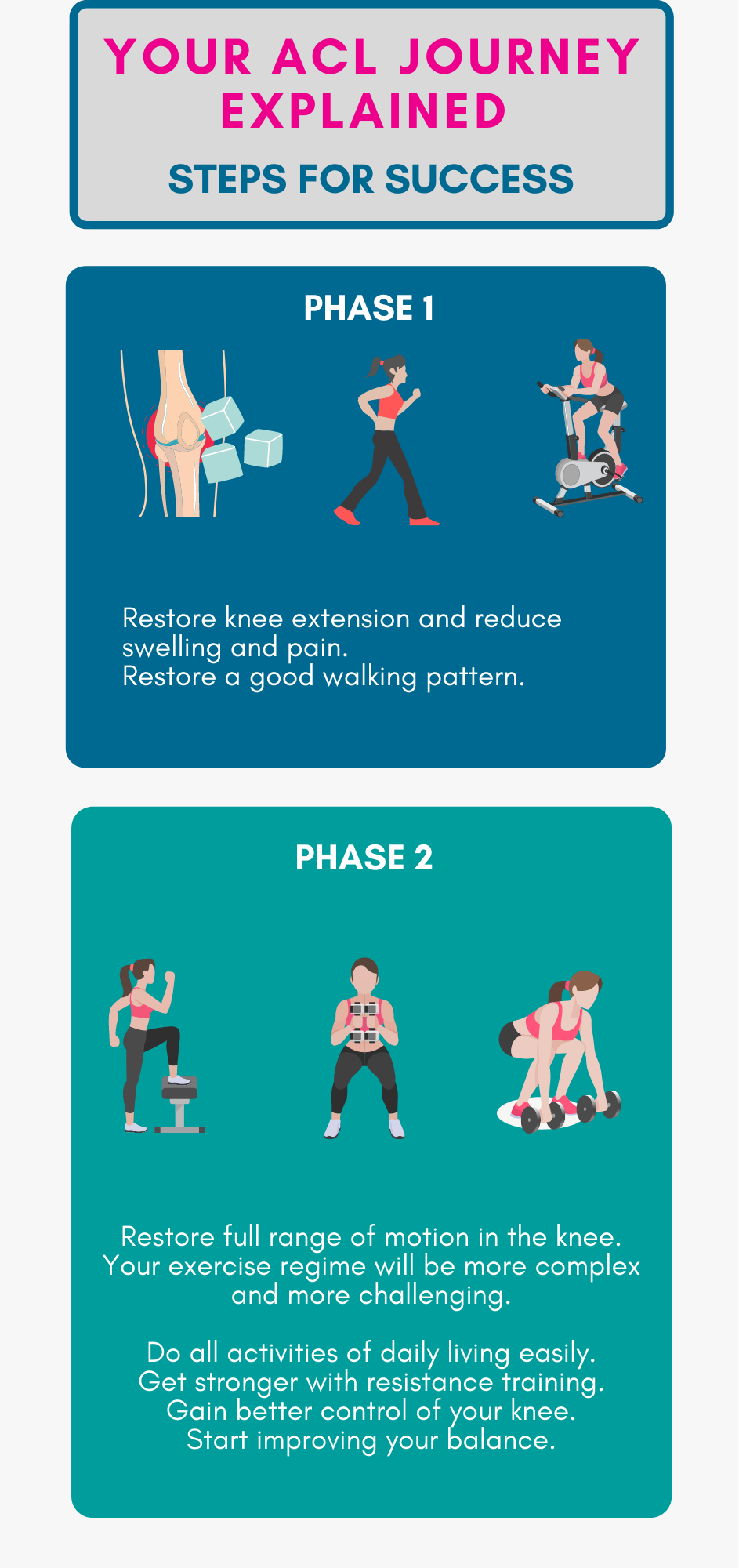
Rehab is paramount to your ACL recovery (with or without surgery) . Without rehab, ACL surgery is meaningless. All the top knee surgeons agree.  Your ACL rehab determines the success of your recovery. We recommend an evidence-based programme that's divided into four progressive phases. In our experience, this process takes 9 to 18 months to complete.  

Phase 1: Restore knee extension and reduce swelling  

Immediately after sustaining your injury or after your surgery, the muscles around your knee may feel weak, and your joint may be swollen and painful. In addition, you may not be able to completely straighten your knee.  During this stage of your recovery, the aim is to reduce swelling and pain and get your knee completely straight again. This phase typically takes 2-3 weeks.  


Phase 2: Strength & Neuromuscular control 

 After you've passed the criteria to move onto phase 2, the fun stuff begins!  You'll introduce a new set of exercises, including squats, lunges, leg presses, and more. These will continue throughout your rehab programme, becoming more complex as you advance through the various stages. 


Phase 3: Plyometrics 

After passing all the phase 2 criteria, you can ramp up the fun a little more and start introducing hopping, jumping, landing, and running movements.  These sport-specific functional activities need to be retrained for your to safely return to your sport.  


Phase 4: Return to Sport  

Until this moment you have been working towards Phase 1-3.  Before you get back to your sport, you and your Physiotherapist should discuss how and plan how you will do it.  


General guidelines for ACL rehab 

  • Follow each phase-specific exercise and test and only move on to the next phase once you have mastered the current one. 
  • You need to achieve your rehab goals in the correct order to ensure you fully recover. 
  • If you stop or skip steps in your rehab, you can worsen your current injury or increase your chances of re-injury when you eventually return to your sport.   


Conclusion 

Now that you know how to get a diagnosis, choose the proper treatment, and understand the rehab process better, you can move on from your ACL injury in the right direction. Yes, the rehabilitation process is long and requires dedication and patience. But, with the right team supporting you, your progress can be smoother, and it can be a whole lot more fun! 


Our highly experienced and knowledgeable Physiotherapists can get you where you want to be. So, call us now and put your ACL recovery planning in our hands! 

Knee Pain


Knee pain is common. For some, the simple activities of daily living such as walking or climbing stairs can become cumbersome when your knee hurts. For others a niggle in the knee can deteriorate and adversely affect sporting performance. There are many causes of knee pain, so it is important for you to know what is causing the pain. There are however some common themes that occur with most types of knee pain.

Why does my knee hurt?

The knee is comprised of many structures including ligaments (connects bones together) tendons (attach muscles to bone) and cartilage (the connective tissue between bones). Most injuries in this area are caused by multiple problems over a long period of time- this could include muscular weakness, overuse, direct trauma or even lifestyle factors.  

Most patients say that when their knee hurts, they tend to want to do less activity as more activity requires bearing extra load through the knees.  Otherwise simple activities such as climbing the stairs or even going on a run can feel scary.  Often, it leads to us searching for answers by having x-rays or scans.  Sometimes a scan can look really scary, and sometimes we are told that we have “bone rubbing on bone” or our cartilage has “completely gone”. This can increase fear and further reduce activity and weight bearing through the knee. 

However, just like we all get wrinkles or grey hair, age related chages to our knees are inevitable. Researchers now believe that inactivity is a major contributor to age-related diseases and disabilities, and that regular exercise can reduce or reverse those risks.

What should I do if I have knee pain?  

Most knee pain can be treated through a graded rehab programme. Typically, this consists of a combination of strength training, education and a good understanding of how to implement your programme.  It is important to have a supervised programme so that you know exactly where to start and know exactly how you are going to progress over the course of the rehab programme.  

When we strengthen the muscle around our knees we increase our knee’s ability to withstand the load that we tend to put on them on a daily basis.

FUN FACT:  Forces transmitted across the knee joint during normal walking range between 2 and 3 times body weight!

This makes them much less likely to experience pain in the future. Over recent times we have seen a huge body of evidence to suggest that an 8-12 week exercise programme can significantly reduce knee pain and symptom progression.  

What Should I Do Now?  

  • Seek out advice from a healthcare professional who understands knee pain and is up to date with the current research.
  • As mentioned before, scans are not always needed, and scans often do not correlate with the pain you are experiencing. 
  • Begin strength training with the supervision of a healthcare professional.  
  • Other factors to consider are sleep, diet and body weight- all of which can contribute to pain and pain sensitivity.  

 Here are some great simple knee exercises to try at home:


5 injuries you didn’t think you could get from cycling

1. Runner’s knee

Yes, I said it! You can get runner’s knee from cycling. Contrary to popular belief, this painful problem is not confined to those who hit the pavements in their trainers alone. In fact, there’s a growing number of cyclists that land up on my treatment table that have been plagued with this pesky problem. The problem with cycling (cue “gasp” from our lycra-clad friends) is that the answer may not always be straight forward.

Read More

Football season is on: watch that hamstring!

The Premier league season has just started with a couple of big surprises already. The transfer market is heading for a record this year but the number one priority of every club will be to keep their players in shape, whether they are new recruits or existing ones.

Hamstring injuries in particular will be watched very closely by the clubs’ physios. According to Football Association Medical Research Programme, hamstring strains are the most common injury sustained costing an estimated 90 days and 15 matches missed per club per season. [1]

Read More

“Snow” need to worry about a niggly knee this ski season!

Thinking of warming away the winter blues with a bit of Alpine Sun? Concerned about an injury? Fear not, Vitality Physiotherapy is here to help!

The most common injury sustained on the slopes, is an ACL tear. The Anterior Cruciate Ligament (ACL) is located within the knee joint and connects the tibia (leg bone) to the femur (thigh bone). It is an important stabiliser of the knee joint. The ACL is commonly ruptured as a result of quick decelerations, hyper extension or excessive rotation.

Read More

Jumper’s Knee (patella tendinopathy)

Patella tendinopathy was called jumpers knee due the high incidence amongst athletes involved in jumping sports- such as volleyball, basketball and netball. However this condition may occur in both the sporty and non-sporty population groups.

Read More

ITB friction syndrome (runner’s knee)

ITB Friction syndrome is a very common complaint amongst elite and amateur runners alike. It is caused by the friction of the outside thigh muscle against the lateral aspect of the thigh bone (the lateral aspect of the end of the femur).

Read More