COVID-19 Rehab: Your Questions Answered (And How Physio Can Help)
COVID-19 Rehabilitation and Long-COVID Recovery
It is staggering to think that these words never existed two years ago. Now, entire market sectors are dedicated to them. In January 2020, the World Health Organisation (WHO) called the new Coronavirus outbreak a “Public Health Emergency of International Concern”.
Three months later, a global pandemic was declared, and life as we knew it changed. Early on, the WHO did not expect a vaccine in less than 18 months. Then, against all odds, the world’s institutions combined their forces and produced a vaccine within 11 months.
Hope was renewed, and a way forward pathed.
With more than half of the UK population now vaccinated, it’s tempting to assume the COVID nightmare is almost over. But, this may be short-sighted. Although we’ve made progress, there’s still much more to learn about this disease before we can move on from this pandemic.
The reality is the world is healing, and many people have a long journey ahead of them.
These are the most common questions we get from patients and carers, and we hope by the end of this article you will have found the answers you’re looking for.
1. WHAT IS CORONAVIRUS AND COVID-19?
Coronaviruses (CoV) are a large family of viruses that cause illnesses ranging from mild common colds to more severe conditions like SARS and MERS. The Coronavirus at the centre of the pandemic is a new strain called SARS-CoV-2. The virus spreads through direct contact or respiratory droplets that contact the nose, mouth, or eyes.
Data shows Black and Asian ethnic minority populations have poorer outcomes but, ongoing symptoms occur across all population groups. The WHO reports, ‘anyone can get sick with COVID-19 and become seriously ill’. Those found to be at most significant risk of severe COVID-19 illness are:
- Men
- People over 60
- Those with an underlying health condition.
2. WHAT ARE THE MOST COMMON SYMPTOMS OF COVID-19?
COVID-19 can show up as a mild or severe disease. In some cases, it can progress quickly, so knowing the symptoms and understanding the difference between mild and severe cases helps save lives. These are the most common symptoms:
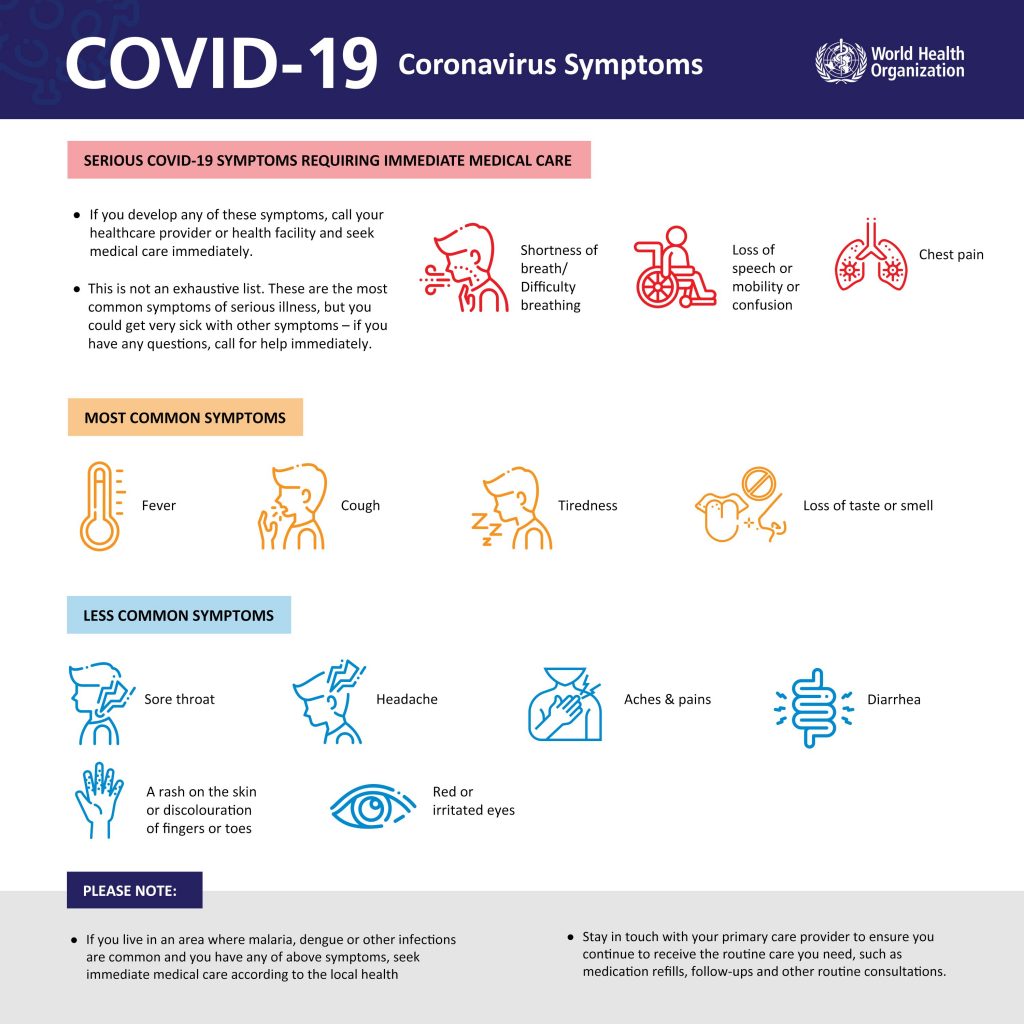
COVID-19 Coronavirus Symptoms (Source: WHO)
As with any new outbreak, little is known about the condition until more studies are conducted. Time brings more information, improved knowledge, and ultimately, better management of the disease or condition.
Since COVID-19 is a new condition, the list of symptoms may change in the future. Therefore, it’s best to keep up to date with current evidence.
3. HOW LONG DOES IT TAKE TO RECOVER FROM COVID-19?
COVID-19 recovery is different for everyone. The WHO reports most people (about 80%) will recover without needing hospital treatment. Around 15% will require oxygen treatment, and 5% will need intensive care due to critical illness.
Many people get back to their normal activities within a few weeks, but most recover within 12 weeks. Unfortunately for some, symptoms can last longer than 12 weeks. New initiatives provide guidance and support for those dealing with COVID-19, either directly or indirectly.
The NHS has done a terrific job with its website, www.yourcovidrecovery.nhs.uk. It’s an incredible resource for anyone needing support through their or a loved one’s COVID-19 recovery.
4. WHAT IS ‘LONG-COVID’?
Long-COVID is the extended period of illness after initial COVID-19 infection.
The National Institute for Health and Care Excellence (NICE) develops COVID-19 care guidance based on these definitions and timelines:
- Acute COVID-19: Signs and symptoms up to 4 weeks
- Ongoing symptomatic COVID-19: Signs and symptoms from 4 -12 weeks
- Post-COVID-19 syndrome: Signs and symptoms presenting as clusters during or after COVID-19 infection, with no alternative diagnosis and lasting longer than 12 weeks
- Long-COVID includes both the ongoing symptomatic COVID-19 and post-COVID-19 syndrome stages

Image: Vitality Physiotherapy. Source: NICE
In a joint UCL 2021 study, researchers found patients hospitalised with COVID-19 still had symptoms more than seven weeks after hospital discharge.
These included:
- Persistent breathlessness (53%)
- Cough (34%)
- Fatigue (69%)
- Depression (14.6%)
They also found that 38% of Chest X-Rays remained abnormal and 9% showed worsening.
As much as we want this pandemic over, some symptoms are an ongoing reality in many people’s lives.
Long-COVID symptoms are wide-ranging and fluctuating, and these can change in nature over time.
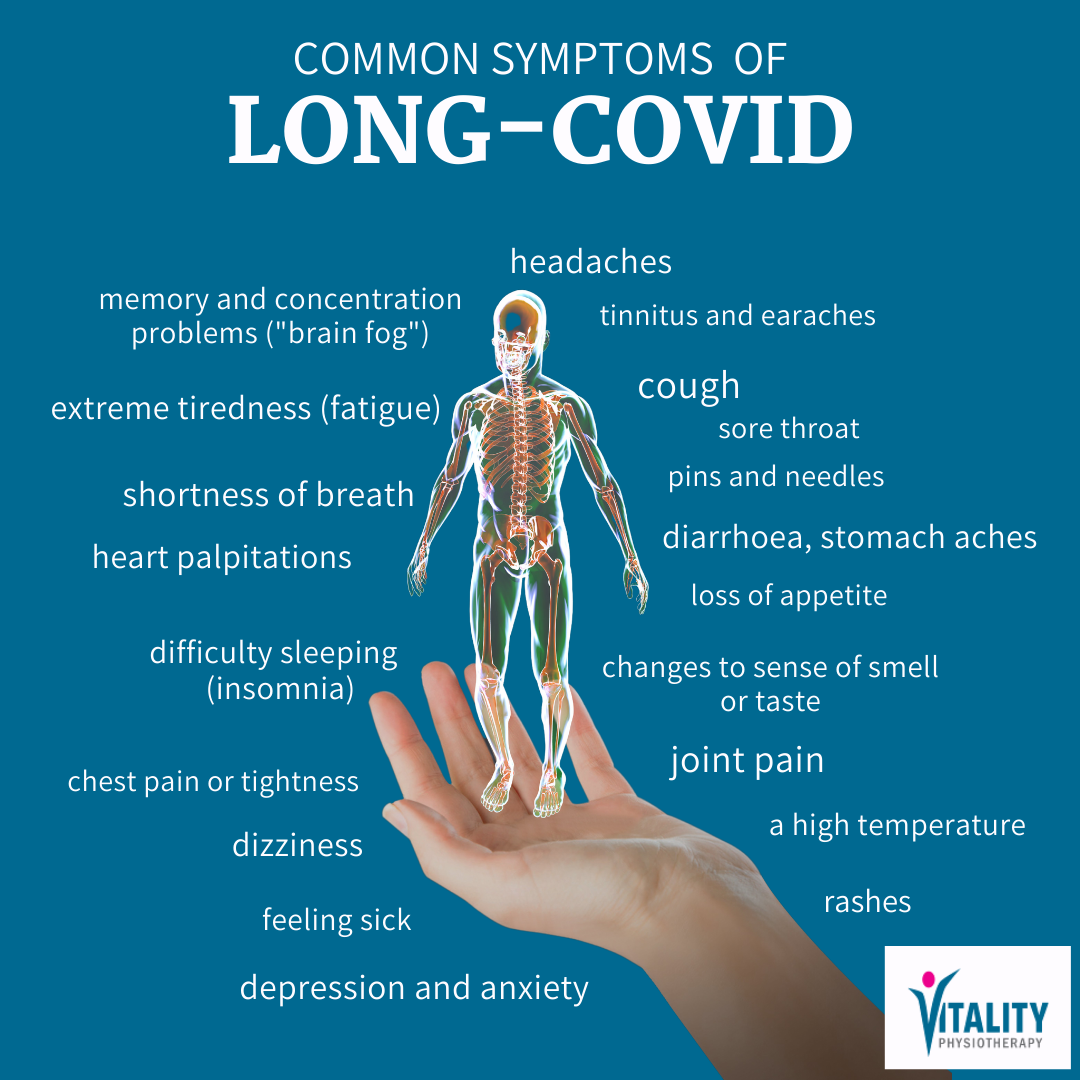
Image: Vitality Physiotherapy, Source: NHS
5. WHAT CAUSES LONG-COVID?
The research is scarce about the causes of Long-COVID. However, a theory about viral persistence has emerged. Certain body parts (brain, testes, eyes, spinal cord) are considered ‘safe havens’ or immune-privileged organs to our immune cells. These are ‘no-go areas’ for immune attacks.
When viruses hide out in these body sites and come out later, causing relapses, it’s called viral persistence. In these organs, damage from an immune attack is riskier than allowing an invader (a virus, for example) to infect the cells.
In June 2020, a National Geographic article called ‘How long does Coronavirus last inside the body?’ explored viral persistence and explained how it impacts your recovery.
6. WHO CAN GET LONG-COVID?
The short answer? Anyone who gets COVID-19 can get Long-COVID. Many people believe they will not experience severe symptoms if they are not at risk.
The chances of having long term symptoms does not seem to be linked to how ill you are when you first get COVID-19.
– NHS
The NHS clarifies an important aspect here – your initial and post-COVID symptoms may not be related. But why can’t we predict how unwell we’ll get with COVID-19 or tell whether we will develop long-term symptoms?
In a review into the global health strategies surrounding COVID-19, a researcher explained it like this:
‘What follows after the acute phase of SARS-CoV-2 infection depends on the extension and severity of viral attacks in different cell types and organs.’
– Aging clinical and experimental research
In other words, how sick you become after acute infection depends on how severely the virus attacked during the acute phase.
Viruses also affect our immune systems differently. Unfortunately, we cannot predict which patients will have a worse outcome from the limited clinical evidence and research data.
This NHS video discusses how post-COVID symptoms affect healthy young people. For example, a 26-year-old former marathon runner describes how ten weeks after her initial infection, she still couldn’t walk for more than 15 minutes at a time in this BBC article.
These stories, along with countless others, demonstrate that no one is safe from Long-COVID.
7. WHAT HAPPENS IN A COVID-19 PHYSIO APPOINTMENT?
Your appointment will include a thorough assessment and a concise treatment plan.
Assessment includes:
- A screen for serious illness
- A discussion about your case history to find out about your current and previous functional abilities and challenges
- A respiratory examination
- A musculoskeletal examination
Treatment includes:
- A uniquely designed custom treatment plan according to your specific goals and functional requirements determined in your assessment.
8. HOW CAN PHYSIOTHERAPY HELP?
COVID-19 Rehabilitation tools, techniques and exercises help:
- Reduce breathlessness
- Increase your lung capacity
- Pace your activities
- Manage fatigue
- Improve your exercise tolerance
- Rehabilitate muscle and joint dysfunction
We show you a way forward and help you manage your symptoms better so you can live your life.
In any holistic Physiotherapy Rehabilitation programme, an onward referral network is essential. We work with experts to help you recover fully.
If we suspect you need further investigation, we will refer you to our trusted colleagues for extra help:
- Specialist Medical Physicians
- Respiratory consultants
- GP’s
- Psychiatrists
- Sports and Exercise Medicine Consultants
- Speech and Language Therapists
- Occupational Therapists
- Psychotherapists
There is more to COVID-19 than just a virus. You can feel the impact on every aspect of your life – physically, mentally, socially and financially.
Have you waited long enough for things to improve on their own? You are not alone on this journey – we’re on your team!
COVID-19 is a complex puzzle, and we are here to help you solve it! Don’t wait any longer to restore your quality of life and start doing the things you love again!
Get in touch with our specialist team now!